




PHOENIX Wound Matrix®: Rebuilding the Foundation for Healing Across Trauma, Reconstruction, and Orthopedics
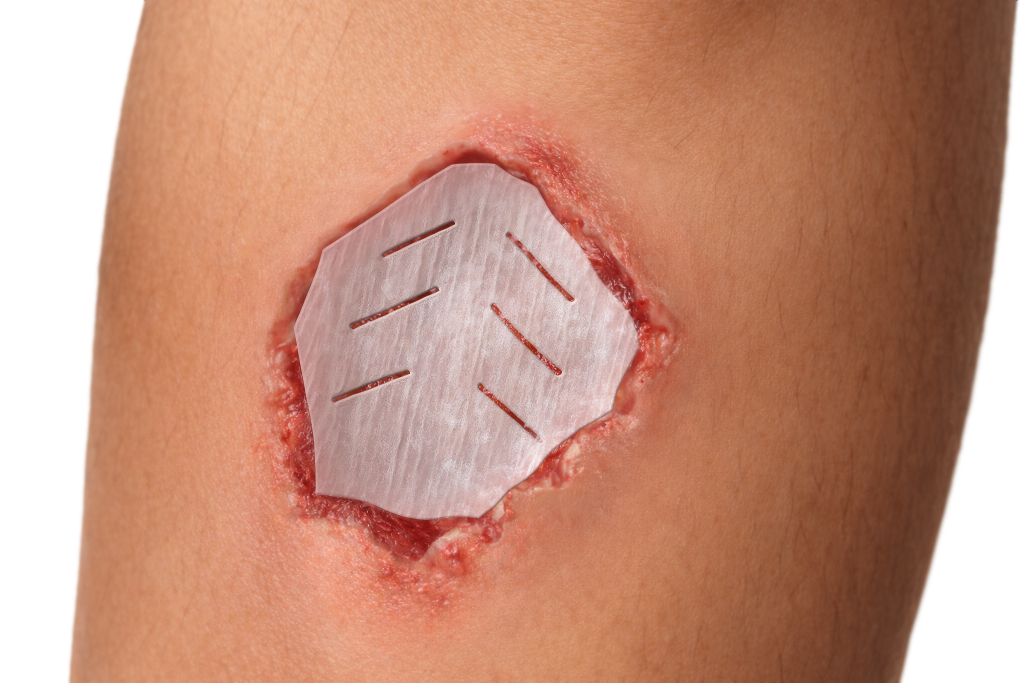
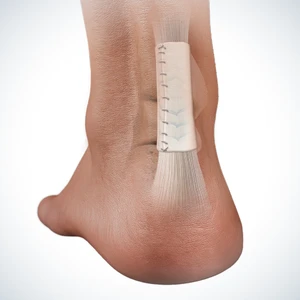
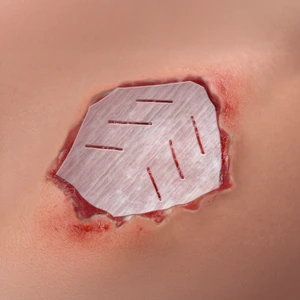
Not Every Healing Challenge Starts at the Surface Complex wounds often require more than coverage. In trauma, reconstruction, limb salvage, and orthopedic procedures, surgeons frequently encounter tissue loss, dead space, exposed structures, and compromised wound beds that are not ready for grafting or closure. PHOENIX Wound Matrix® is designed for that challenge: creating a wound environment that supports granulation tissue formation, tissue remodeling, and progression of the healing cascade in complex soft-tissue defects. PHOENIX is designed to be both effective and easy to use. The flexible, conformable scaffold contours to complex wound beds and irregular anatomy, helping surgeons achieve contact with the tissue while simplifying application in challenging soft-tissue environments. A Synthetic Scaffold Designed for the Wound Environment PHOENIX is a 100% synthetic, bioresorbable electrospun scaffold composed of PGA, Polyglycolic acid, and PLCL, Poly(lactide-co-caprolactone) fibers. Its architecture is designed to mimic native ECM, supporting cellular attachment, migration, tissue remodeling, and healthy granulation tissue formation. This approach reflects a broader shift in wound care. A review of synthetic wound matrices noted that synthetic scaffolds may offer advantages, including consistent composition, handling characteristics, reduced concerns related to tissue sourcing, and biocompatibility with tissue formation. (Lantis, 2023) Clinical Evidence for Electrospun Synthetic Matrices The clinical rationale for PHOENIX is supported by published evidence on 3D electrospun synthetic polymer matrices. In a multicenter prospective case series evaluating 50 complex wounds in 38 patients, investigators reported a mean wound area reduction of 67.6% at four weeks and 80% at eight weeks. By 12 weeks, 66% of wounds had healed, despite a population with significant comorbidities and hard-to-heal wounds. The authors concluded that the matrix appeared to help accelerate stalled healing and contribute to wound closure. (Garoufalis, 2023). pH, Lactate, and the Microbiome The science behind PHOENIX also extends to the wound microenvironment. As the PGA/PLCL scaffold resorbs, the bioactive degradants, glycolic acid, lactic acid, and caproic acid can contribute to a lactate-rich, lower-pH environment. Additional research suggests that lactate may act as a signaling molecule involved in angiogenesis, cellular recruitment, and granulation tissue formation. Supporting the importance of the wound microenvironment, a SAWC poster evaluating diabetic foot ulcers demonstrated that treatment with a polylactic wound matrix was associated with: These findings reinforce the growing understanding that wound pH influences multiple aspects of healing and suggest that creating a more favorable microenvironment may help support granulation tissue formation and wound progression. Applications Across Trauma, Reconstruction, and Orthopedics PHOENIX may be especially relevant when surgeons are managing wounds where the central problem is not surface coverage, but wound bed preparation. Potential applications include: PHOENIX is not just a wound care product. It is a reconstructive tool for complex soft-tissue environments where surgeons need to fill tissue deficits, support granulation, and prepare the wound for grafting or closure. Extending the Concept Into Orthopedic Healing The same biologic principle applies in orthopedic surgery. Surgeons are using Atreon’s scaffold technologies, including ROTIUM, ROTIUM Lo Pro, and BioCharge, when tissue quality is poor, repair durability is a concern, or the biology of healing may need support. Applications include rotator cuff repair, quadriceps and patellar tendon repair, foot and ankle tendon reconstruction, revision total knee arthroplasty, and other soft-tissue challenges. Rebuilding the Foundation Underneath PHOENIX brings together electrospun scaffold design, synthetic bioresorbable materials, and microenvironment-focused wound science. Whether managing traumatic soft-tissue loss, preparing a wound for grafting, or addressing compromised tissue in a reconstructive procedure, surgeons are often faced with the same challenge: creating an environment where healing can move forward. References
AAOS Guidelines, Bioinductive Implants, and the Future of Rotator Cuff Augmentation
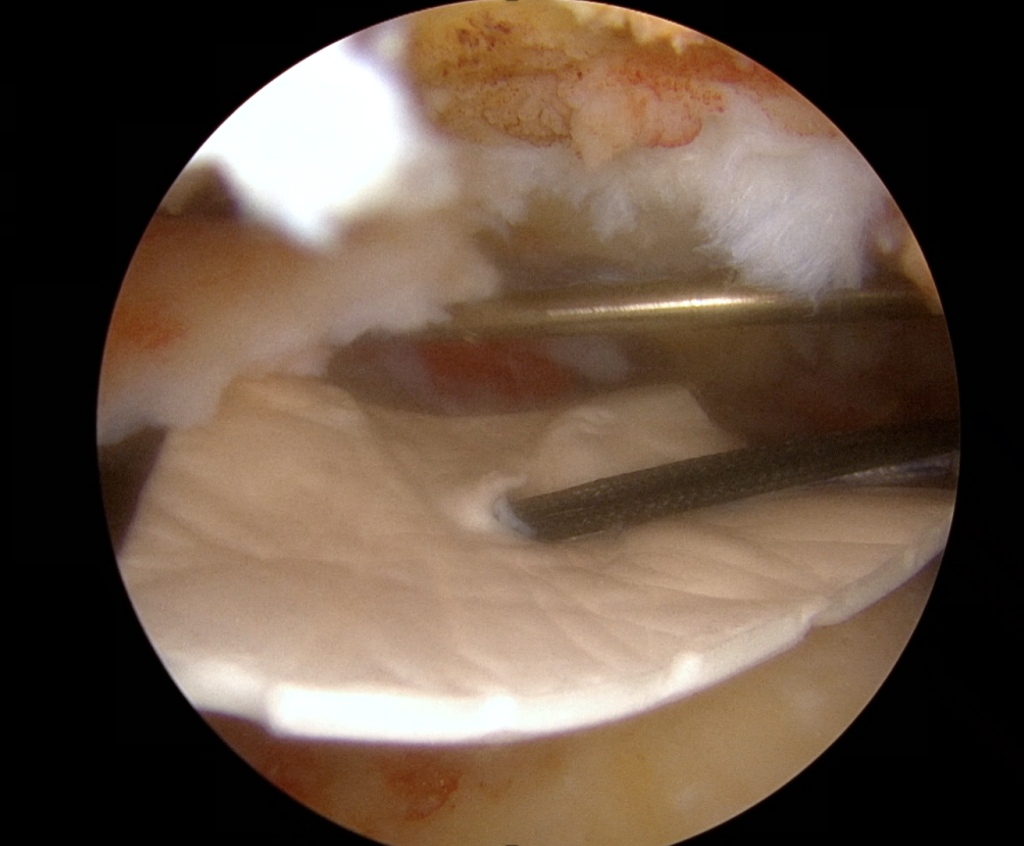
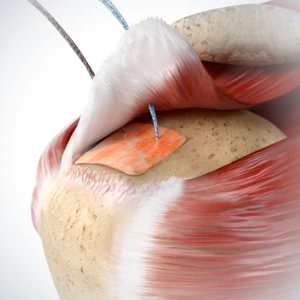
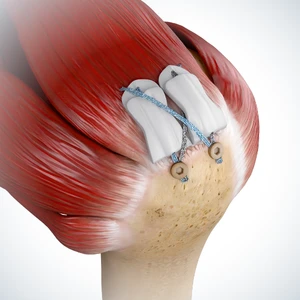
What Changed in the 2025 AAOS Rotator Cuff Guidelines? The 2025 clinical practice guideline update from the American Academy of Orthopaedic Surgeons reflects an evolving approach to rotator cuff repair—one that places increasing emphasis on both mechanical fixation and the biologic environment of healing. The updated guidelines incorporate the latest evidence on surgical and biologic treatment strategies, including augmentation techniques, as part of the broader management of rotator cuff injuries. Rather than focusing exclusively on repair mechanics, surgeons are increasingly evaluating ways to improve healing at the tendon-bone interface, where long-term repair success is ultimately determined. What the AAOS Says About Bioinductive Implants One of the most notable additions to the 2025 guideline is a dedicated recommendation regarding bioinductive implants. According to the guideline: “The use of bioinductive tendon implants to augment rotator cuff repair or as an alternative to non-augmented repair can lead to lower retear rates and better patient-reported outcomes.” The recommendation received: According to the AAOS methodology, a Strong recommendation requires consistent findings from multiple high-quality studies and no compelling reasons to downgrade the evidence. This designation reflects a growing body of clinical literature supporting the role of biologic augmentation strategies in rotator cuff repair. Importantly, the guideline evaluates implants as a category, rather than endorsing any specific product. Outcomes may vary based on patient-specific factors, surgical technique, tear characteristics, and device selection. Why Augmentation Is Gaining Attention Despite advances in arthroscopic repair techniques, retear rates remain a significant challenge in rotator cuff surgery. The AAOS guideline update reflects growing recognition that successful healing depends on more than achieving initial fixation strength. Factors such as tendon quality, vascularity, tissue biology, age, smoking status, and metabolic health all influence tendon-to-bone healing. As a result, augmentation strategies are increasingly being used to support the biologic healing environment while maintaining traditional repair constructs. These approaches are intended to: Defining “Bioinductive” in Rotator Cuff Repair A key concept highlighted in the evolving augmentation landscape is bioinductive technology. A bioinductive implant is designed to: Unlike traditional patches that primarily provide structural reinforcement, bioinductive technologies are intended to support the biologic processes involved in healing. This reflects a broader shift toward regenerative-oriented strategies in orthopedic surgery. Understanding the Different Types of Rotator Cuff Augmentation As interest in biologic augmentation has grown, so has the number of available technologies. A recent review published in the Journal of the American Academy of Orthopaedic Surgeons (JAAOS) categorized augmentation strategies based on both their function and placement within the repair construct. According to the review, augmentation grafts generally fall into three categories: biologic, structural, and hybrid augmentation. The review specifically identifies ROTIUM® Bioresorbable Wick as an example of a biologic augmentation technology. In contrast, dermal allografts are generally classified as structural augmentation, while certain composite scaffold systems are considered hybrid solutions. Interpositional vs. Onlay Implants The JAAOS review also highlights an important distinction in how augmentation technologies are applied during surgery. Most commercially available bioinductive implants are onlay devices, meaning they are placed on top of the repaired tendon after the repair has been completed. By contrast, ROTIUM® is described as an interpositional scaffold, placed directly between the tendon and bone at the tendon-bone interface, also known as the enthesis. The review notes that interpositional grafts are designed to provide biologic support directly at the site where healing occurs and may offer the theoretical advantage of concentrating biologic factors at the tendon-bone interface. Why the Enthesis Matters One of the central challenges in rotator cuff repair is restoring the enthesis—the specialized tissue interface where tendon attaches to bone. The JAAOS authors describe biologic healing at the tendon-bone interface as a critical factor influencing long-term repair success. Healing failures may occur even when fixation remains mechanically intact, particularly when biologic conditions are suboptimal. How Atreon’s Technology Aligns with Bioinductive Principles Atreon Orthopedics has developed a platform of bioresorbable synthetic scaffolds designed to support the biologic environment during tendon repair. ROTIUM® Bioresorbable Wick ROTIUM® is an interpositional scaffold placed at the tendon-bone interface and designed to: The JAAOS review describes ROTIUM® as a fully synthetic biologic augmentation scaffold designed to function as a biologic “wick,” promoting retention of blood and biologic factors directly at the site of tendon healing. Unlike collagen-based implants, ROTIUM® is composed entirely of synthetic materials and is specifically designed for interpositional placement at the tendon-bone interface. BioCharge® Autobiologic Matrix BioCharge® is a bursal-side scaffold designed to: These technologies are intended to support the biologic environment during tendon repair while integrating into established surgical workflows. A Broader Shift Toward Biologic Healing The AAOS guideline update and recent literature reflect an important evolution in rotator cuff repair: From fixation alone toward integration of biologic and mechanical strategies As evidence continues to emerge, augmentation technologies that support healing biology may play an increasingly important role in surgical decision-making. For surgeons, the updated guidance reinforces the importance of considering both mechanical and biologic factors when planning rotator cuff repair, particularly in: For health systems and ambulatory surgery centers, augmentation strategies may support efforts to: Conclusion The 2025 AAOS Clinical Practice Guideline marks an important milestone in the evolution of rotator cuff repair. With a Strong recommendation supported by High-quality evidence, bioinductive implants are now firmly established within the evidence-based discussion surrounding augmentation strategies. At the same time, emerging literature continues to highlight the importance of understanding how different augmentation technologies function—whether through biologic, structural, or hybrid mechanisms. As surgeons seek to optimize healing at the tendon-bone interface, technologies designed to support the biologic environment are likely to remain an important area of innovation and clinical interest. Atreon’s scaffold platform reflects this direction, with technologies designed to support healing at the enthesis and throughout the tendon repair continuum. Regulatory Note ROTIUM® and BioCharge® are medical devices intended for use by qualified healthcare professionals. In the United States, these devices are FDA-cleared for their intended uses. Always refer to the product Instructions for Use for complete indications, contraindications, warnings, and precautions.
Biology Without the Baggage: The Synthetic Scaffold Advantage
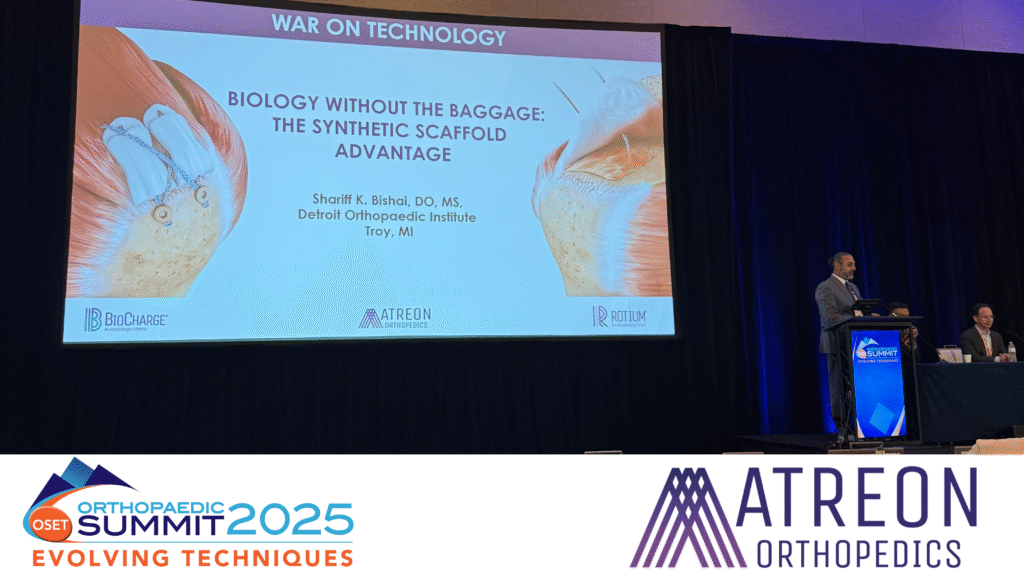
Synthetic Scaffold Advantage in Rotator Cuff Repair, Featuring Dr. Shariff K. Bishai at OSET 2025 Why Synthetic Scaffolds Are Gaining Ground in Shoulder Surgery At the 2025 Orthopedic Summit (OSET) in Las Vegas, Dr. Shariff K. Bishai delivered a compelling presentation titled “Biology Without the Baggage: The Synthetic Scaffold Advantage.” As part of the conference’s “War on Technology” track, his talk spotlighted the evolving conversation around biologic augmentation in rotator cuff repair, particularly the role of synthetic scaffolds as an emerging option. Many in the field see biologic augmentation as a promising approach to address the underlying healing deficiencies that persist when repairs fail. Data from a 600+ patient cohort highlights how variables like tear size, age, tissue quality, and revision status can drastically increase the risk of retear. For “at-risk” patients—those scoring 4–10 on the ROHI scale, enhancing the healing environment at the enthesis may support improved healing outcomes in appropriate patients, based on early clinical data (Kwon, 2018). Limitations of Dermal Allograft Augmentation Dermal patches have long been used in augmentation of massive or revision rotator cuff repairs. While intended to provide structural support and reduce tension at the repair site, these grafts come with challenges: According to a recent publication, 70 months after implantation, the dermal allograft used in SCR failed to remodel into normal tendinous tissue, showing persistent acellularity and randomly oriented collagen rather than tendon-like structure (Best, 2025). These factors can contribute to unpredictable outcomes, especially in procedures where consistency and efficiency are critical. The Tradeoffs of Collagen-Based Patches Collagen-based patches, often derived from bovine collagen, offer a biologic approach designed to stimulate healing through native signaling cues. However, concerns persist around: Multiple published studies have shown that in some cases, collagen-based bioinductive implants may not outperform standard repairs, prompting a closer look at their value in everyday surgical practice. One such study concluded, “At minimum 2-year follow-up, patients undergoing primary arthroscopic rotator cuff repair with bovine collagen implant augmentation had a greater proportion of reoperation due to inflammation and stiffness compared with patients who did not receive the implant.” (S, Umasuthan, 2025). Lippincott Journals A New Option: Synthetic Scaffolds with Purpose-Built Design Autobiologic vs. Bioinductive Healing Synthetic scaffolds like ROTIUM represent a new class of technology: autobiologic implants. Unlike bioinductive materials that introduce foreign biologic components (e.g., bovine collagen) to stimulate healing, autobiologic scaffolds work by leveraging the patient’s own healing factors—blood, cells, and cytokines—delivered directly to the tendon-bone interface or repair site. These implants do not carry donor or animal tissue but instead serve as a biologically inert conduit that promotes natural, localized tissue remodeling. Synthetic scaffolds represent a different strategy: replicating the mechanical and biologic support of the native extracellular matrix using engineered, fully resorbable materials. Benefits of this approach include: One such product is the ROTIUM® Bioresorbable Wick, an interpositional scaffold FDA-cleared for use in tendon repair, including rotator cuff augmentation. It’s a “biologic delivery device” for autologous healing factors directly at the tendon-bone interface, without requiring additional instrumentation or cumbersome delivery systems. Versatility Across All Tendon Repairs ROTIUM is FDA-cleared for use across a wide range of tendon repairs – not just in the shoulder – and can be placed at the tendon-bone interface in procedures involving the elbow, hip, knee, foot, and ankle. BioCharge is designed specifically for rotator cuff repair, where it uses a built-in suture tunnel that acts as a delivery mechanism. ROTIUM and BioCharge have been used in over 16,000 procedures to date (reflects accumulated usage, not clinical study volume). Clinical Implications and Takeaways In summary, synthetic scaffold technology offers surgeons a biologically active solution that’s reproducible, cost-effective, and simple to deploy, a valuable asset in both hospital and ASC settings. Learn More Explore Atreon’s ROTIUM Bioresorbable Wick or visit our Technology Overview to see how our scaffold platform is helping reshape tendon repair. External Links: References