



Rotator cuff repair techniques have advanced significantly, yet healing failure after surgery remains a common challenge. Even with modern arthroscopic fixation and double-row constructs, healing ultimately depends on the biologic environment of the repaired tendon. For surgeons managing larger tears, compromised tissue quality, or revision repairs, augmentation strategies are becoming an increasingly important part of the treatment algorithm.
Arthroscopic rotator cuff repair has become the standard of care for symptomatic full-thickness tears and cases that fail nonoperative treatment. However, despite advances in surgical techniques and fixation technology, retear rates can still range from roughly 20% to 90% depending on tear size and repair strategy.
These persistent challenges have driven increasing interest in rotator cuff augmentation techniques, particularly the use of scaffold implants designed to reinforce the repair and support biologic healing.
Why Rotator Cuff Repairs Sometimes Fail
Traditional rotator cuff repairs primarily address the mechanical fixation of tendon to bone using sutures and anchors. While this provides strong initial stability, successful healing ultimately depends on the biologic response of the tendon.
Several factors can compromise healing, including:
- Degenerative tendon tissue
- Limited vascularity at the repair site
- High mechanical loads on the repair construct
- Weakness at the tendon–suture interface
One of the most common failure mechanisms occurs when sutures cut through weakened tendon tissue, leading to loss of fixation before the tendon has fully healed.
Because of this, many surgeons are exploring augmentation strategies that reinforce the repair construct while supporting the biologic healing environment.
How Biologic Scaffolds Support Rotator Cuff Healing
Biologic scaffolds are designed to provide a temporary structural matrix that interacts with the body’s natural healing processes. Synthetic grafts used in rotator cuff augmentation have been shown to demonstrate biomechanical properties similar to native rotator cuff tendon, including comparable stiffness and maximal load to failure.
When used during repair, scaffold implants may help:
- Reinforce weakened tendon tissue
- Distribute load across the repair construct
- Support cellular activity during early healing
- Promote more organized tendon remodeling
Surgeons interested in the underlying scaffold design principles can explore the science behind Atreon’s tendon healing technology.
BioCharge® Autobiologic Matrix for Rotator Cuff Augmentation
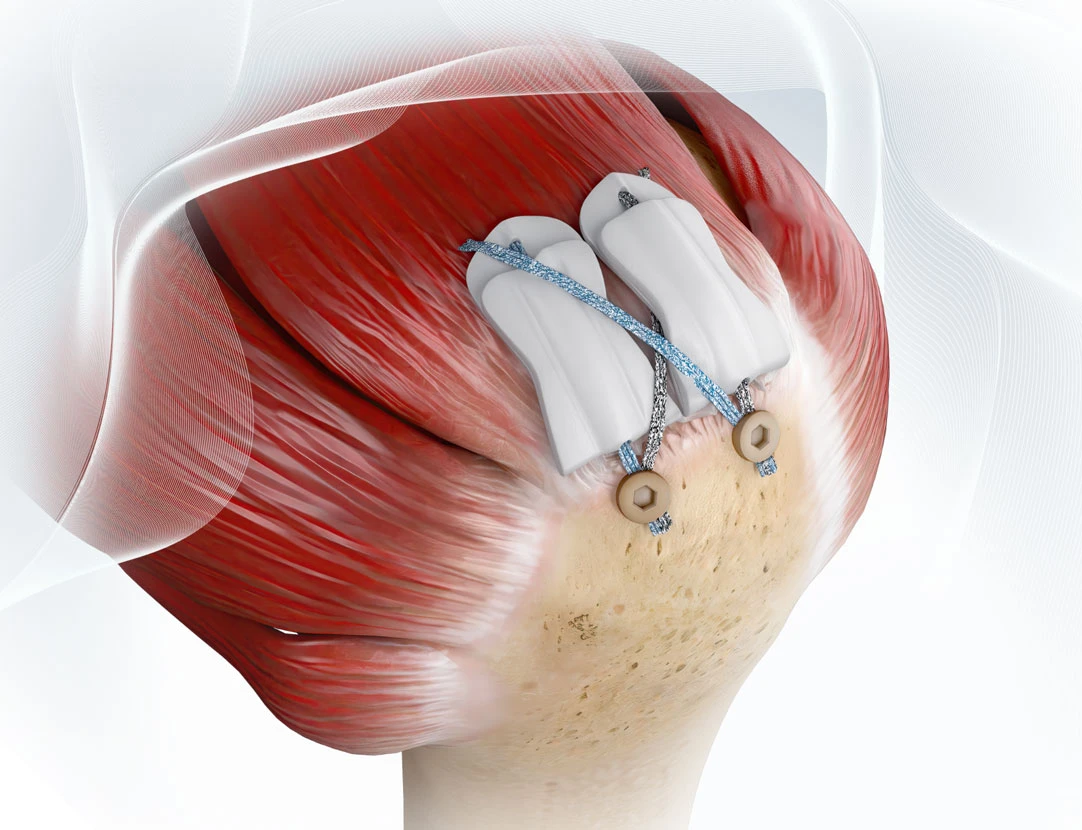
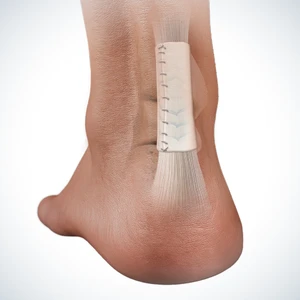
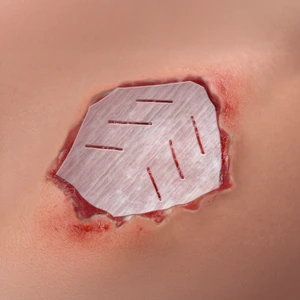
One augmentation option is BioCharge® Autobiologic Matrix, a bioresorbable synthetic scaffold engineered with PGA & PLCL that mimics the native ECM. Designed as a bioinductive scaffold that promotes cellular activity and collagen remodeling by wicking the patient’s own biologic factors to the repair site, the scaffold supports the native healing process of the tendon.

The implant is positioned on the bursal side of the tendon, where it reinforces the surface of the repaired cuff and supports healing at the tendon–suture interface.
BioCharge is designed to:
- Help deter suture cut-through failure
- Improve tissue quality around the repair
- Support the biologic healing environment on the tendon surface by wicking and promoting cellular infiltration
- BioCharge is designed to integrate efficiently and seamlessly into standard arthroscopic rotator cuff repair without requiring additional fixation or specialized instrumentation
Learn more about the implant and surgical workflow on the BioCharge Autobiologic Matrix product page.
Visualizing the BioCharge Technique
To help surgeons visualize the procedure, Atreon Orthopedics has developed a surgical animation demonstrating BioCharge augmentation during rotator cuff repair.
Surgical Technique: Augmented Double-Row Rotator Cuff Repair
A recently published surgical technique describes how BioCharge can be incorporated into a double-row arthroscopic rotator cuff repair.
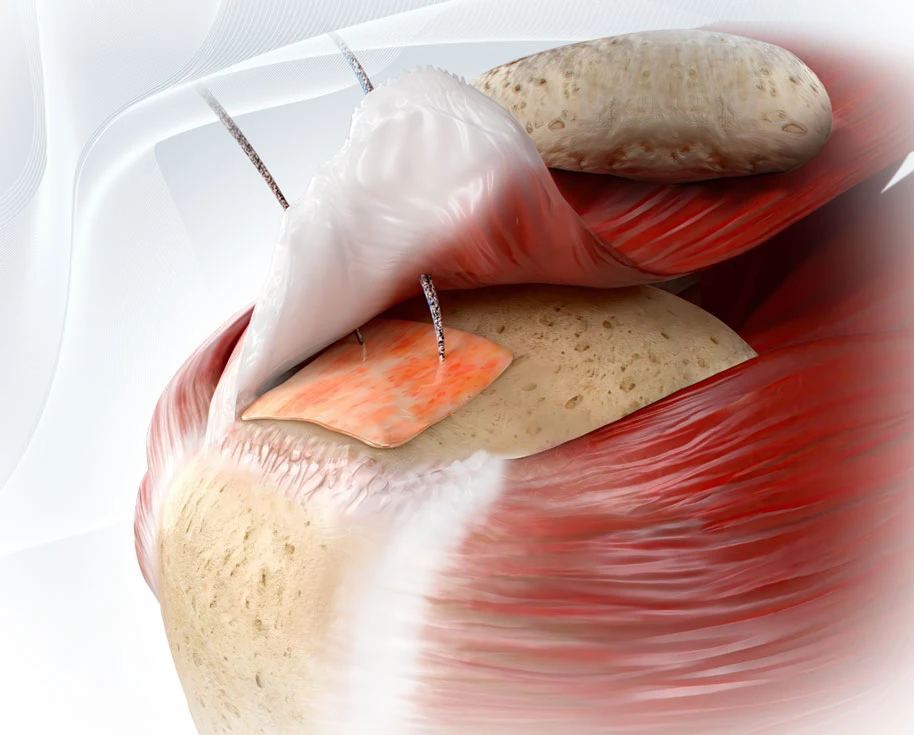
The procedure begins with standard arthroscopic evaluation of the shoulder joint followed by entry into the subacromial space. After bursectomy and visualization of the tear, the rotator cuff footprint is prepared until adequate bone bleeding is achieved to promote healing.
Once the medial row anchors are placed and sutures are passed through the tendon:
- A suture limb is loaded through the built-in BioCharge suture tunnel through a snare
- The implant is introduced arthroscopically through a cannula
- The scaffold is positioned so it lies flat across the tendon surface
- Lateral-row anchors are placed to complete the suture bridge construct
The final repair creates a double-row construct with BioCharge augmentation, increasing footprint compression while allowing the scaffold to wick local biologic factors into the repair environment.
Improving Biologic and Mechanical Healing in Rotator Cuff Repair
Rotator cuff surgery continues to evolve beyond mechanical fixation alone. Increasingly, surgeons are focusing on the biologic environment surrounding the repair, recognizing that tendon healing depends on both structural stability and cellular activity.
Tools like the Rotator Cuff Healing Index (RoHI) help surgeons identify higher-risk cases where healing may be compromised. In these situations, augmentation technologies such as BioCharge Autobiologic Matrix may help reinforce the repair and support the biologic healing process.
Atreon Orthopedics continues to develop technologies designed to improve tendon healing from multiple biological perspectives. In addition to BioCharge, the ROTIUM® Bioresorbable Wick supports healing at the tendon-bone interface during rotator cuff repair.
References
- Doka R, Mijic D, Badman BL, Juma SL, Geers B, Bishai SK. Rotator Cuff Repair Augmented With a Reinforced Bioabsorbable Autobiologic Matrix. Arthroscopy Techniques. 2025.
- Kwon J, et al. The Rotator Cuff Healing Index: A Clinical Tool to Predict Healing After Rotator Cuff Repair. American Journal of Sports Medicine.
- Galatz LM, et al. The Outcome and Repair Integrity of Completely Arthroscopically Repaired Large and Massive Rotator Cuff Tears. Journal of Bone and Joint Surgery.
- Atreon Orthopedics. BioCharge® Autobiologic Matrix Product Information. Available at:
https://atreonortho.com/products-technology/biocharge-autobiologic-matrix/ - Atreon Orthopedics. Understanding the Rotator Cuff Healing Index (RoHI). Available at:
https://atreonortho.com/
Disclaimer
BioCharge® Autobiologic Matrix is intended for use as an adjunct to surgical rotator cuff repair. Surgeons should consult product labeling and instructions for use before implantation.