



The Biologic Challenge in Foot & Ankle Tendon Healing
Tendon injuries in the foot and ankle, especially those involving the Achilles or posterior tibial tendon, are among the most difficult to treat. Even with precise surgical technique, outcomes can be undermined by rerupture, chronic pain, delayed healing, or wound complications — issues that are magnified in patients with comorbidities such as diabetes, obesity, or vascular insufficiency.
- A registry study of 204 Achilles repairs showed that only ~42% of patients reported “full recovery” at one year, with many citing ongoing limitations [1].
- Complication rates remain notable, with studies reporting 11–13% rates of infection, rerupture, or wound problems [2].
- In a large cohort of >24,000 Achilles repairs, comorbidities significantly increased postoperative complication rates and costs [3].
These data underscore the need for biologic support that can assist tendon healing from the inside out.
In a recent virtual clinical discussion hosted by the Journal of Orthopaedic Experience & Innovation‘s “Open Mic Night”, surgeons reflected on how comorbidities impact their practice today. Dr. Dan Bhakta, a prominent foot & ankle specialist in Arlington, TX, stated that diabetes, weight, and smoking all contribute to challenges in patient care and biologic healing. He emphasized the need for studies and usage of new technologies that aim to improve and optimize healing for foot & ankle surgeries.
ROTIUM®: A Scaffold Designed to Support Healing
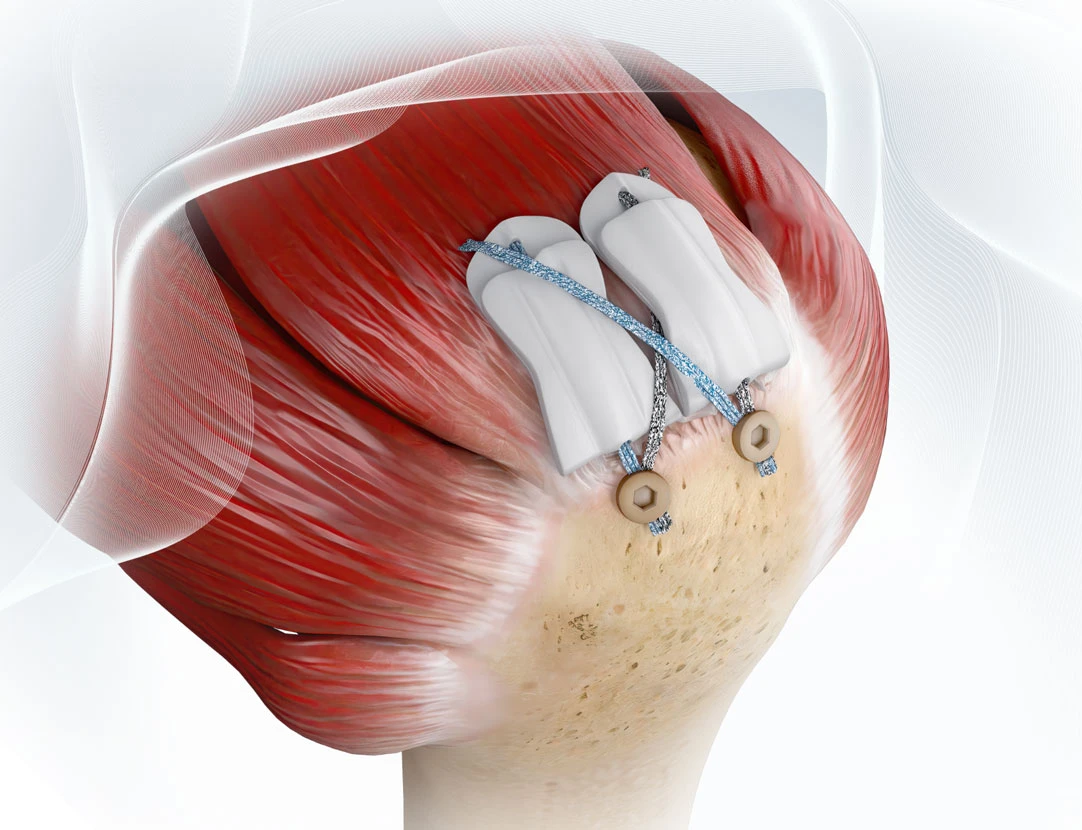
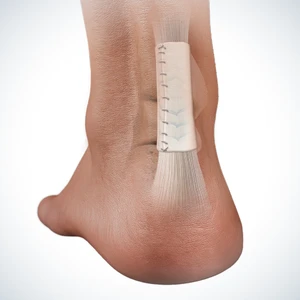
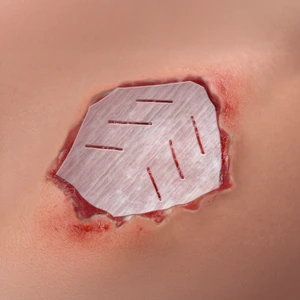
ROTIUM® is a 100% synthetic, bioresorbable scaffold designed to augment biologic healing by mimicking the structure and function of native extracellular matrix (ECM). It creates a supercharged environment for cellular activity:
- Electrospun nanofiber matrix
- Designed to wick and retain biological milieau
- Releases organic acids throughout 3-4 month resorption to stimulate healing
- Supports tendon remodeling via organized collagen formation
ROTIUM® is engineered to promote the RIGHT environment for the body to heal.
Clinical Use Cases in Foot & Ankle Surgery
■ Achilles Tendon Repair (Insertional Achilles Repair + Haglund’s Deformity)
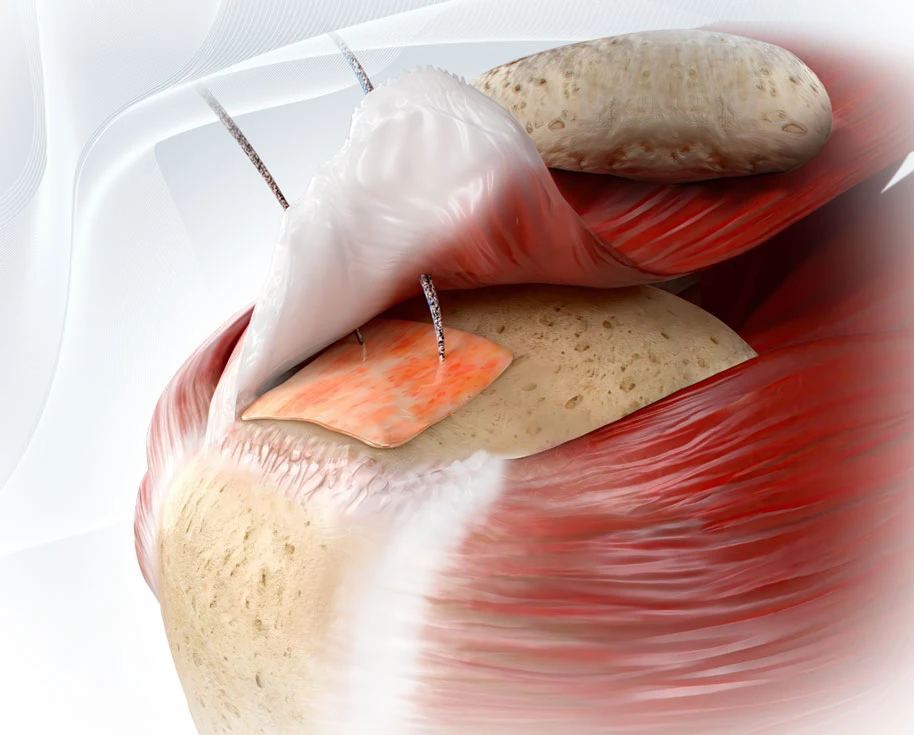
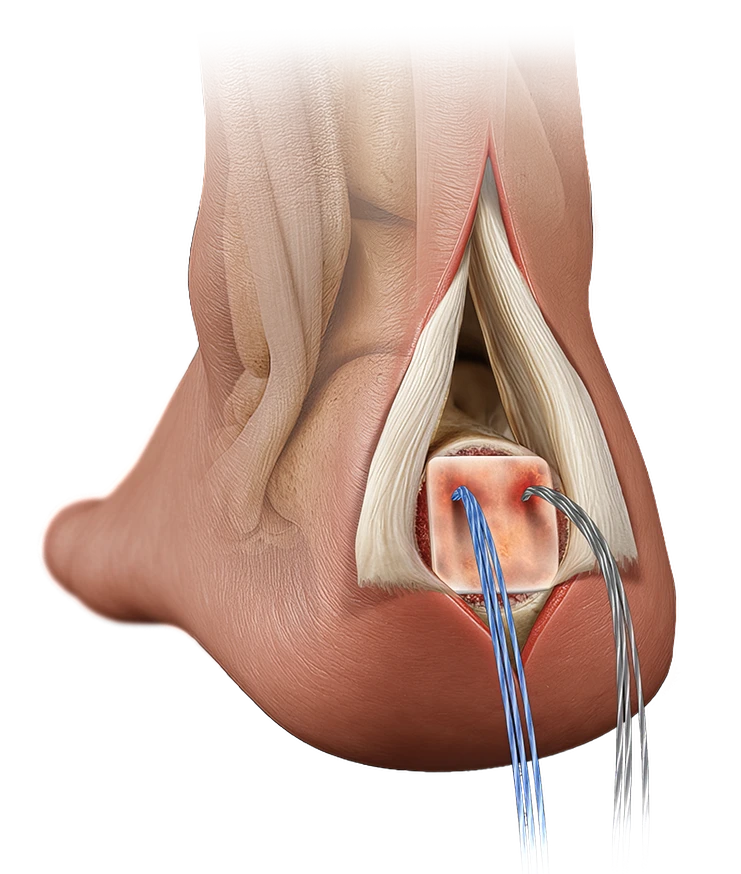
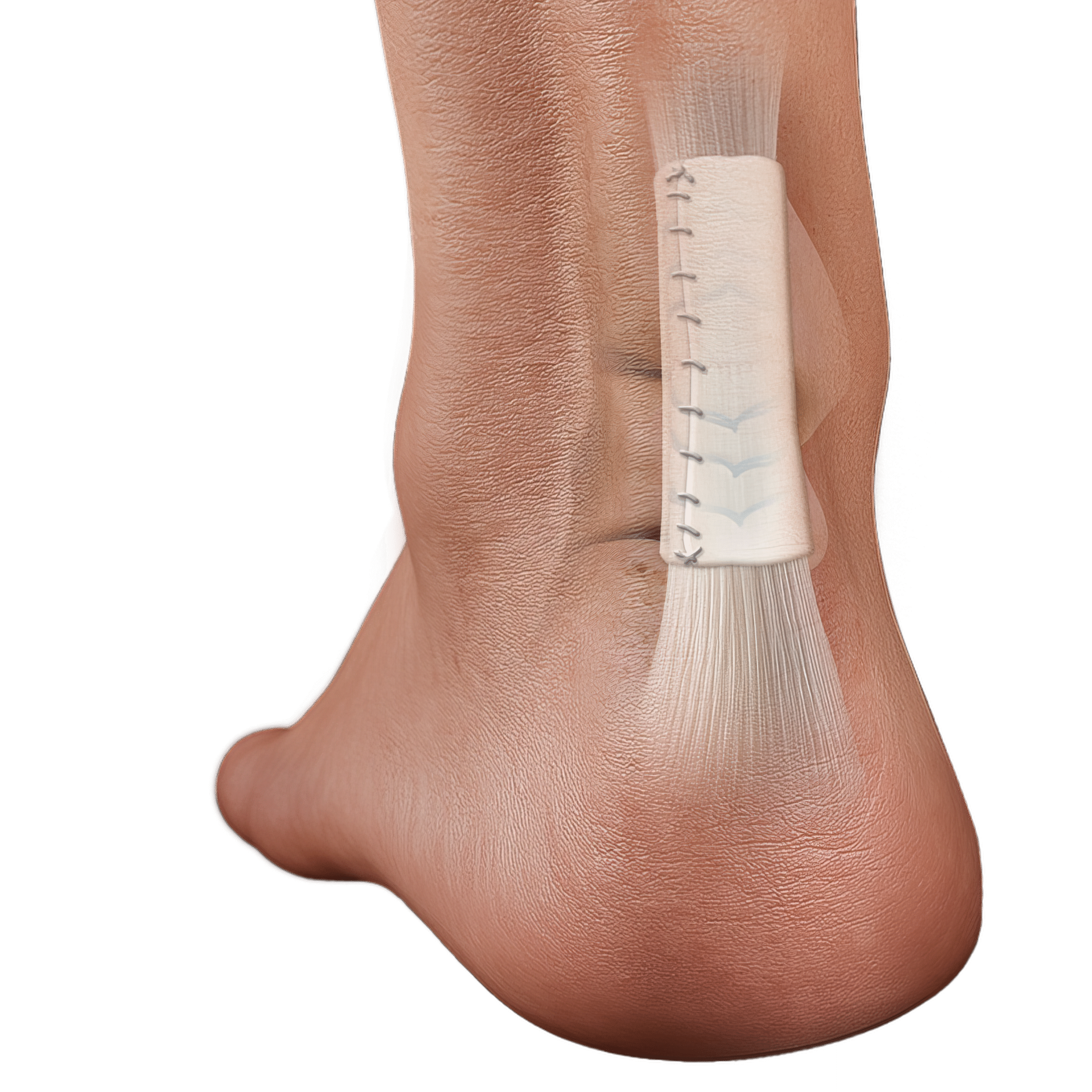
In delayed or chronic Achilles ruptures, or in high-risk patients, healing capacity is often limited. Using ROTIUM® as an interpositional scaffold following Haglund resection can be beneficial when reattaching tendon to bone, which carries risks of failure or poor integration. In insertional repairs, an onlay or wrapped application of ROTIUM® can support local biologic activity and add support to the tendon for improved integration.
■ Posterior Tibial Tendon Reattachment in the Kidner Procedure
The Kidner procedure (excision of accessory navicular + advancement of posterior tibial tendon) is a tendon-to-bone repair that may benefit from biologic scaffold support. ROTIUM® can be placed at the reattachment site to create a favorable environment for tendon-bone healing, especially in revision or high-demand cases.
■ Other Tendon Repairs or Transfers (Flatfoot, Cavus Foot, etc.)
In complex deformity reconstructions involving tendon transfers, augmentation with ROTIUM® may assist in cases with poor tissue quality and the need for enhanced biologic remodeling
Why a Synthetic Scaffold in Foot & Ankle?
- Consistent resorption profile: Controlled breakdown promotes cellular ingrowth and vascularization over 3-4 months
- Reduced risk of inflammation/immune reaction that may be associated with collagen-based grafts
- Versatile format: Can be used as an inlay, onlay, or wrap, depending on procedure.
- Efficient and economically-conscious: ASC-driven applicability that adds very little time to the procedure with a cost-effective pricing model
- Supports biologic healing: Organic acid degradants (e.g., lactic acid, glycolic acid, and caproic acid) stimulate cellular activity critical to tendon repair.
ROTIUM® offers a biologic edge in healing environments where intrinsic recovery is impaired and the design rationale is well-matched to the biologic demands of foot & ankle repairs. While more research is needed, ROTIUM® presents a safe, low-profile, and high-potential option with nearly 20k cases performed in tendon repairs.
References
- Fox G, Gabbe BJ, Richardson M, Oppy A, Page R, Edwards ER, Hau R, Ekegren CL. Twelve-month outcomes following surgical repair of the Achilles tendon. Injury. 2016 Oct;47(10):2370-2374.
- Stavenuiter XJR, Lubberts B, Prince RM 3rd, Johnson AH, DiGiovanni CW, Guss D. Postoperative Complications Following Repair of Acute Achilles Tendon Rupture. Foot Ankle Int. 2019 Jun;40(6):679-686.
- Dombrowski M, Murawski CD, Yasui Y, Chen AF, Ewalefo SO, Fourman MS, Kennedy JG, Hogan MV. Medical comorbidities increase the rate of surgical site infection in primary Achilles tendon repair. Knee Surg Sports Traumatol Arthrosc. 2019 Sep;27(9):2840-2851.
- JOEI Open Mic Webinar