



For millions of Americans, getting back to work means asking a repaired tendon to get back to work, too.
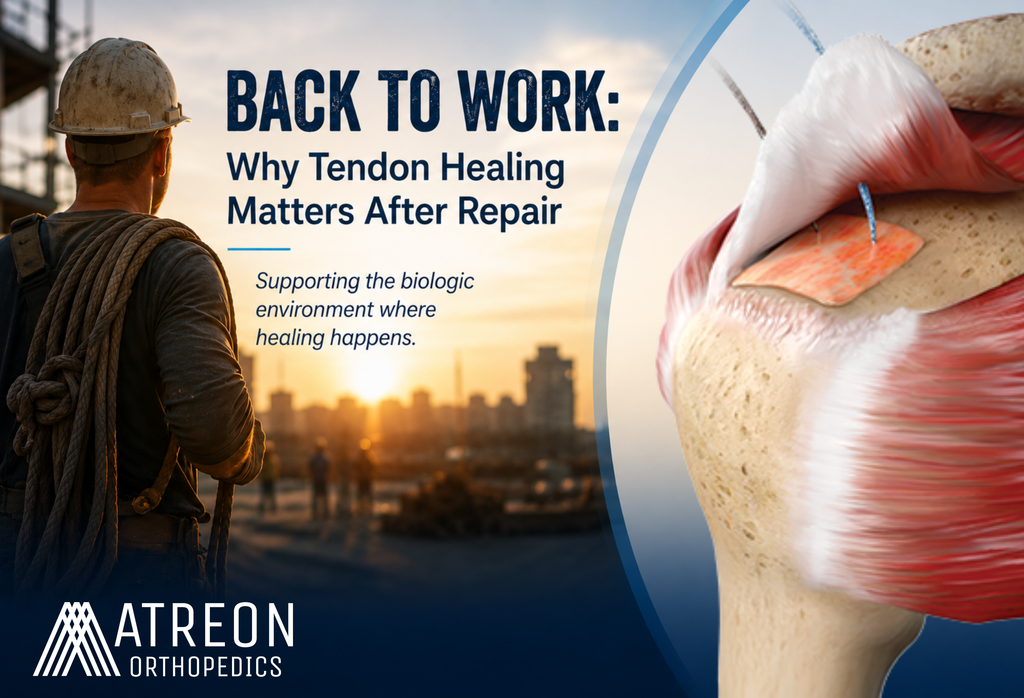
Labor Day celebrates the people whose strength, skill, and movement keep industries running. But when a tendon injury takes someone away from the job, successful orthopedic treatment isn’t measured only by pain scores or range of motion. For many patients, an important milestone is returning to the work they performed before their injury.
Recent orthopedic research underscores just how challenging that can be, particularly for people whose jobs place substantial physical demands on tendon healing.
The Physical Demands of Returning to Work
A 2025 scoping review examining return to work after rotator cuff surgery evaluated 21 studies representing 5,445 patients. The authors identified workload as the occupational factor with the greatest influence on return to work, with heavy manual work negatively influencing the return-to-work process.¹
Those findings are reinforced by research examining arthroscopic rotator cuff repair specifically. In a cohort of 83 patients, Perez Kalejman and colleagues found that although 98.8% eventually returned to work, the demands of the job mattered considerably. Median return was four weeks for light-intensity work, compared with 12 weeks for moderate work and 22 weeks for high-intensity work.²
For surgeons treating working patients, that distinction matters. Returning to an office is very different from returning to a job that requires repetitive lifting, overhead activity, pushing, pulling, or carrying.
A Repaired Tendon Has a Job to Do, Too
Mechanical fixation is essential to tendon repair—but fixation is only the beginning of the healing process.
The tendon-to-bone interface must progress through a complex healing and remodeling process while the repair is gradually exposed to increasing demands during rehabilitation.
That challenge has driven growing interest in the biologic environment surrounding tendon repair.
A recent Mayo Clinic review of rotator cuff repair and biologic augmentation notes that failure of tendon healing remains a concern despite advances in surgical technique. The authors describe a rapidly evolving field examining the healing environment and adjunctive approaches including platelet-rich plasma (PRP), bone marrow aspirate concentrate (BMAC), scaffolds, and graft-based augmentation.³
Importantly, the review also emphasizes that variability in study methodology and clinical outcomes currently limits definitive recommendations about how these strategies should be applied.³
Why Biology Is Entering the Conversation
This emerging research raises an important question: If returning to demanding activity ultimately places substantial loads on a repaired tendon, should surgeons consider the biologic environment alongside mechanical fixation?
Biologic augmentation strategies approach this challenge in different ways. The goal is not to replace sound surgical technique. Instead, these technologies are being investigated as adjuncts to the mechanical repair. Can supporting the biologic environment contribute to the broader goal of tendon healing?
Where Scaffold Augmentation Fits
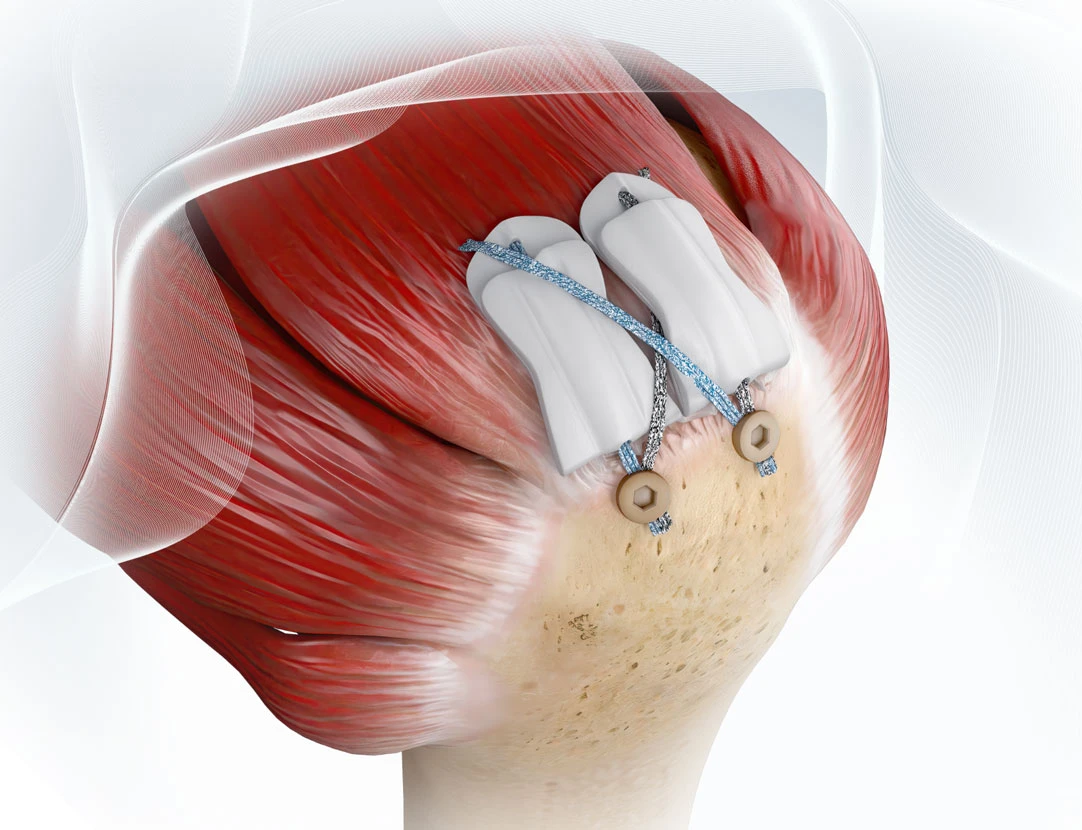
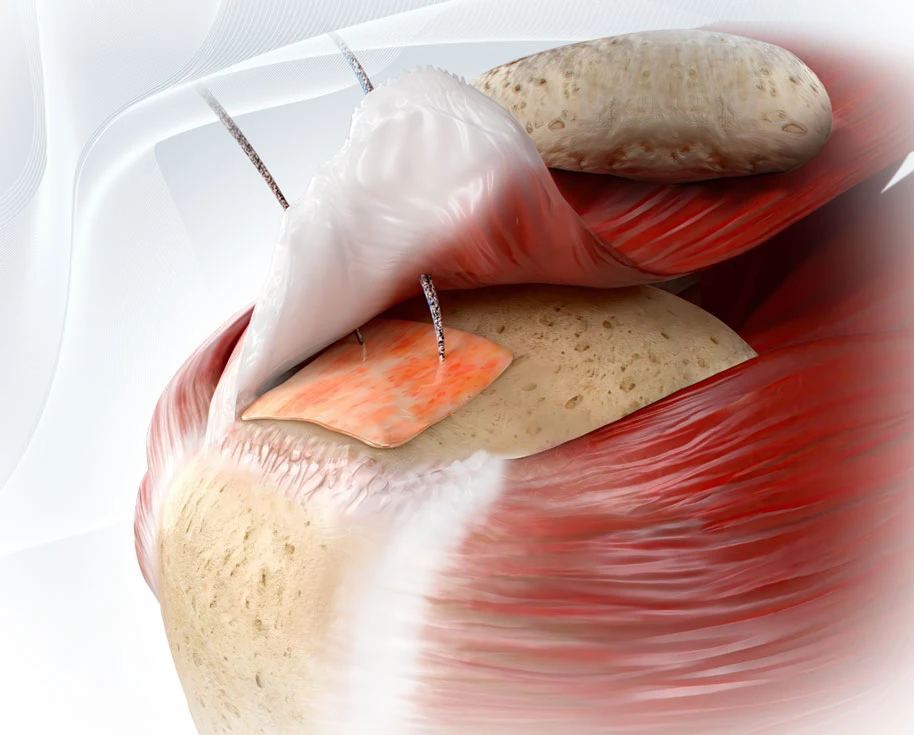
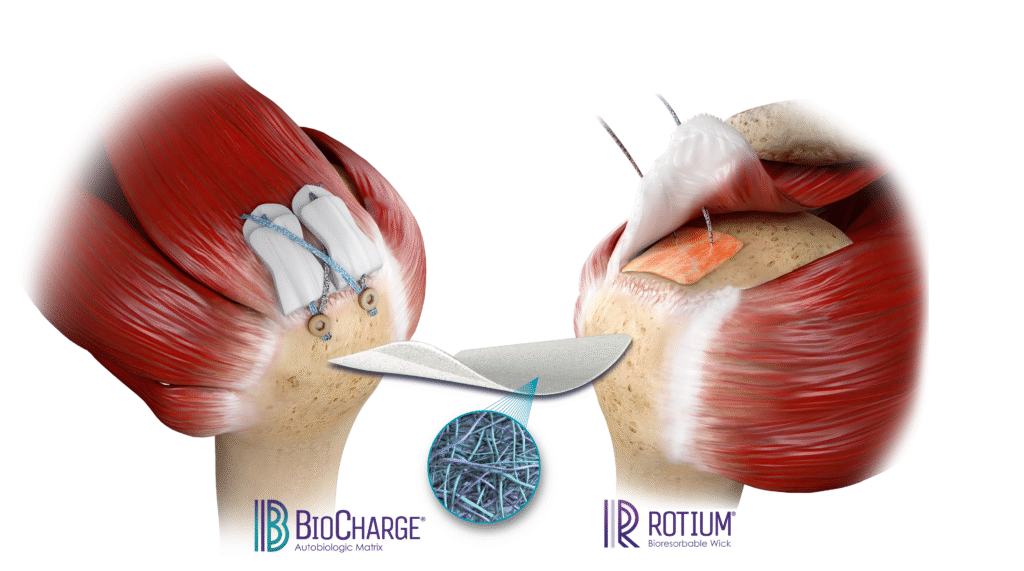
One approach is an interpositional scaffold positioned directly at the tendon-to-bone interface.
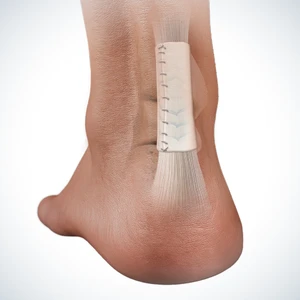
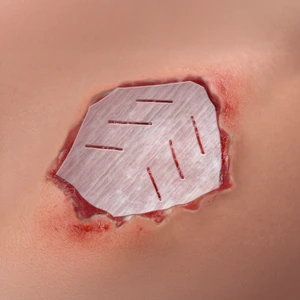
The ROTIUM® Bioresorbable Wick is a 100% synthetic, bioresorbable scaffold designed to support the biologic environment and healing cascade at the tendon-to-bone interface. ROTIUM is FDA-cleared for tendon repair and can be incorporated into acute and chronic tendon procedures, including primary repairs, augmentations, and revisions.
Rather than suggesting that scaffold augmentation itself determines when someone returns to work, its role is more appropriately understood within the larger evolution of tendon repair: mechanical fixation establishes the repair, while augmentation strategies seek to support the environment in which healing takes place.
This Labor Day, Remember the Goal Beyond the OR
Orthopedic success can be measured in many ways. For the construction worker lifting overhead, the healthcare professional moving patients, the mechanic working with both hands, or anyone whose livelihood depends on physical capability, one measure can be deeply personal:
Can I get back to doing my job?
The research reminds us that returning to physically demanding work after tendon surgery can take time—and that occupational demands themselves influence that journey.¹˒² At the same time, emerging research into biologic augmentation is broadening the conversation around what happens after the sutures are tied.³
This Labor Day, honoring America’s workforce can also mean recognizing the patients working their way back—and the surgeons, therapists, researchers, and technologies working to help support the healing process along the way.
Because sometimes getting back to work starts with helping the body do its own work: healing.
References
1. Lopez Michelena LI. Factors influencing return to work after rotator cuff surgery: A scoping review. Work. 2025;82(3):740-752. doi:10.1177/10519815251353764. The review included 21 studies and 5,445 patients and identified workload as the occupational factor with the greatest influence on return to work.
View the open-access article
2. Perez Kalejman I, Pasqualini I, Larrague C, et al. Factors affecting return to work following arthroscopic rotator cuff repair. Shoulder & Elbow. 2025;17(4):407-413. doi:10.1177/17585732241255947.
View the open-access article
3. Tagliero AJ, Marigi EM, Hart CM, et al. Rotator cuff repair and biologic augmentation—what do we know? JSES Reviews, Reports, and Techniques. 2026;6(1):100605. doi:10.1016/j.xrrt.2025.100605. The review evaluates PRP, BMAC, scaffold- and graft-based augmentation while emphasizing the need for additional high-quality evidence and standardization.
View the open-access article