




Atreon Orthopedics at Shoulder360: Advancing Rotator Cuff Healing
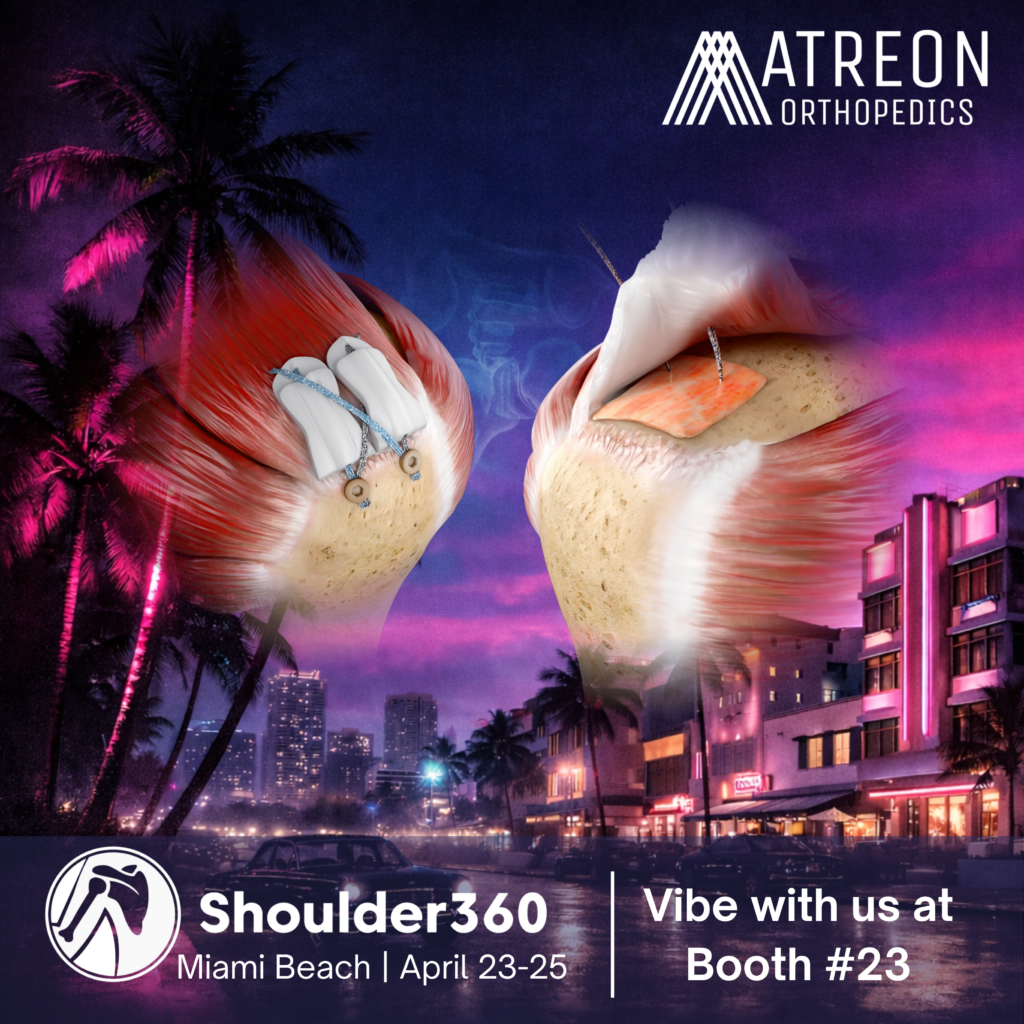
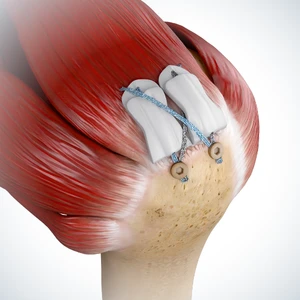
Atreon Orthopedics Heads to Shoulder360 April 23-25, 2026 Atreon Orthopedics is heading to Shoulder360 in Miami Beach—one of the most unique (and most fun) meetings in orthopedics. This isn’t your typical conference. With this year’s “Shoulder Mafia” theme, Shoulder360 blends world-class education with an atmosphere that feels more like a medical device Olympics meets Miami social scene. From the competitive energy on the exhibit floor to the packed social events and after-hours conversations, Shoulder360 creates a setting where collaboration happens naturally and ideas move fast. It’s a meeting where surgeons and industry don’t just present—they interact, challenge each other, and build real relationships. For Atreon, it’s an opportunity to connect with surgeons who are actively shaping the future of rotator cuff healing—while being part of one of the most engaging and memorable experiences in shoulder surgery! Driving Innovation in Rotator Cuff Repair Rotator cuff repair continues to evolve as surgeons seek solutions that address not only mechanical fixation but also the biologic challenges of healing. Atreon Orthopedics is focused on supporting this shift through technologies designed to enhance the biologic environment. Our key products within the shoulder platform includes both the ROTIUM® Bioresorbable Wick and BioCharge® Autobiologic Matrix, complementary technologies designed to support healing at different points of the repair: Together, these technologies enable a comprehensive biologic approach to rotator cuff repair. Enter BioStack: A Comprehensive Biologic Approach Atreon is currently the only company offering a dual-sided biologic strategy for rotator cuff repair—known as BioStack. BioStack enables surgeons to address both sides of the repair construct: This approach is designed to support the overall healing environment surrounding the repair, while integrating seamlessly into existing surgical techniques. Additionally, BioStack offers a cost-conscious solution without the need for additional fixation, disposables, or added instrumentation, aligned with the needs of ambulatory surgery centers and hospitals—balancing innovation with efficiency. Stop by Booth #23: Innovation Meets Experience This year at Shoulder360, we’re not just bringing innovation—we’re bringing an experience. 👉 Visit Atreon at Booth #23 to: Let’s connect, share insights, and continue advancing the future of shoulder surgery—together. Join Us at Shoulder360!
Biology Without the Baggage: The Synthetic Scaffold Advantage
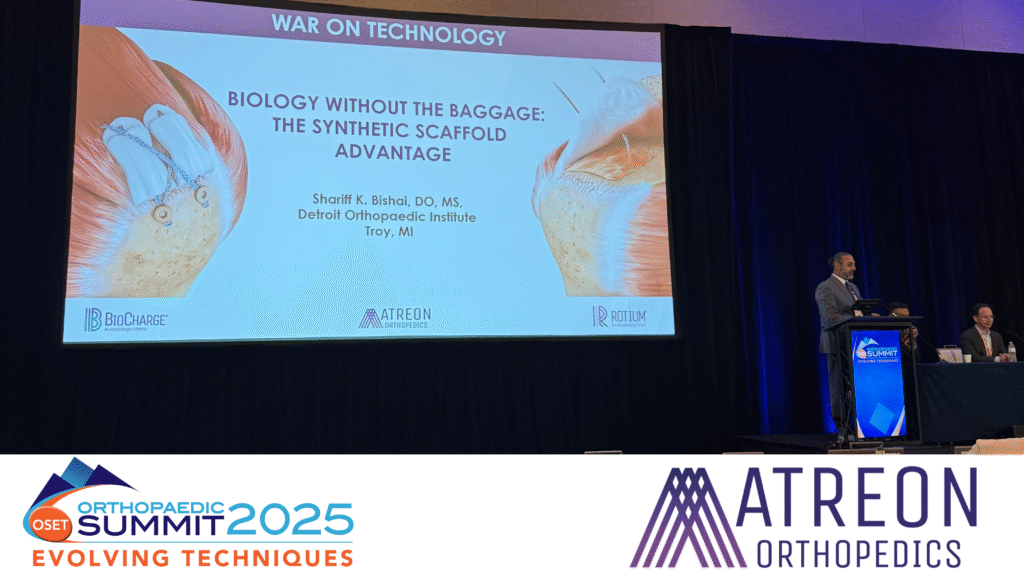
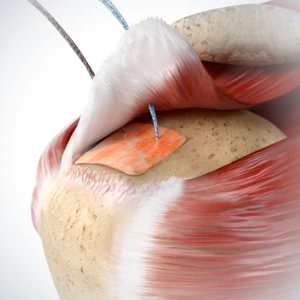
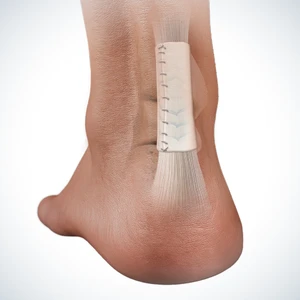
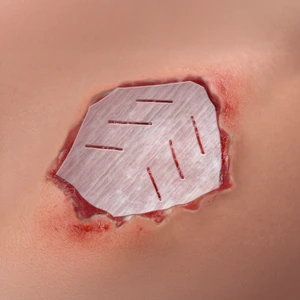
Synthetic Scaffold Advantage in Rotator Cuff Repair, Featuring Dr. Shariff K. Bishai at OSET 2025 Why Synthetic Scaffolds Are Gaining Ground in Shoulder Surgery At the 2025 Orthopedic Summit (OSET) in Las Vegas, Dr. Shariff K. Bishai delivered a compelling presentation titled “Biology Without the Baggage: The Synthetic Scaffold Advantage.” As part of the conference’s “War on Technology” track, his talk spotlighted the evolving conversation around biologic augmentation in rotator cuff repair, particularly the role of synthetic scaffolds as an emerging option. Many in the field see biologic augmentation as a promising approach to address the underlying healing deficiencies that persist when repairs fail. Data from a 600+ patient cohort highlights how variables like tear size, age, tissue quality, and revision status can drastically increase the risk of retear. For “at-risk” patients—those scoring 4–10 on the ROHI scale, enhancing the healing environment at the enthesis may support improved healing outcomes in appropriate patients, based on early clinical data (Kwon, 2018). Limitations of Dermal Allograft Augmentation Dermal patches have long been used in augmentation of massive or revision rotator cuff repairs. While intended to provide structural support and reduce tension at the repair site, these grafts come with challenges: According to a recent publication, 70 months after implantation, the dermal allograft used in SCR failed to remodel into normal tendinous tissue, showing persistent acellularity and randomly oriented collagen rather than tendon-like structure (Best, 2025). These factors can contribute to unpredictable outcomes, especially in procedures where consistency and efficiency are critical. The Tradeoffs of Collagen-Based Patches Collagen-based patches, often derived from bovine collagen, offer a biologic approach designed to stimulate healing through native signaling cues. However, concerns persist around: Multiple published studies have shown that in some cases, collagen-based bioinductive implants may not outperform standard repairs, prompting a closer look at their value in everyday surgical practice. One such study concluded, “At minimum 2-year follow-up, patients undergoing primary arthroscopic rotator cuff repair with bovine collagen implant augmentation had a greater proportion of reoperation due to inflammation and stiffness compared with patients who did not receive the implant.” (S, Umasuthan, 2025). Lippincott Journals A New Option: Synthetic Scaffolds with Purpose-Built Design Autobiologic vs. Bioinductive Healing Synthetic scaffolds like ROTIUM represent a new class of technology: autobiologic implants. Unlike bioinductive materials that introduce foreign biologic components (e.g., bovine collagen) to stimulate healing, autobiologic scaffolds work by leveraging the patient’s own healing factors—blood, cells, and cytokines—delivered directly to the tendon-bone interface or repair site. These implants do not carry donor or animal tissue but instead serve as a biologically inert conduit that promotes natural, localized tissue remodeling. Synthetic scaffolds represent a different strategy: replicating the mechanical and biologic support of the native extracellular matrix using engineered, fully resorbable materials. Benefits of this approach include: One such product is the ROTIUM® Bioresorbable Wick, an interpositional scaffold FDA-cleared for use in tendon repair, including rotator cuff augmentation. It’s a “biologic delivery device” for autologous healing factors directly at the tendon-bone interface, without requiring additional instrumentation or cumbersome delivery systems. Versatility Across All Tendon Repairs ROTIUM is FDA-cleared for use across a wide range of tendon repairs – not just in the shoulder – and can be placed at the tendon-bone interface in procedures involving the elbow, hip, knee, foot, and ankle. BioCharge is designed specifically for rotator cuff repair, where it uses a built-in suture tunnel that acts as a delivery mechanism. ROTIUM and BioCharge have been used in over 16,000 procedures to date (reflects accumulated usage, not clinical study volume). Clinical Implications and Takeaways In summary, synthetic scaffold technology offers surgeons a biologically active solution that’s reproducible, cost-effective, and simple to deploy, a valuable asset in both hospital and ASC settings. Learn More Explore Atreon’s ROTIUM Bioresorbable Wick or visit our Technology Overview to see how our scaffold platform is helping reshape tendon repair. External Links: References