


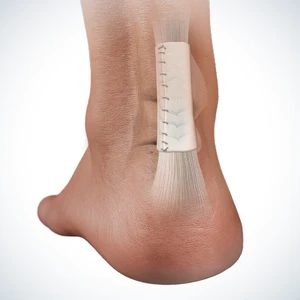

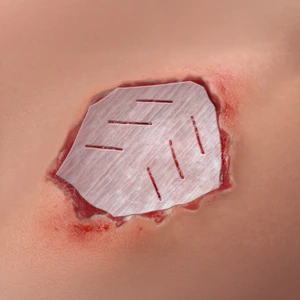
Does biologic augmentation have to be biologic in origin?
At the 2026 International Congress of Shoulder and Elbow Surgery (ICSES) in Vancouver, Atreon Orthopedics brought together a distinguished faculty of shoulder surgeons to challenge conventional thinking around rotator cuff augmentation and explore a different approach to supporting tendon healing.
The symposium, Not Just Another Augment: Rethinking Rotator Cuff Healing from Enthesis to Onlay, featured clinical evidence, scientific insights, surgical techniques, and real-world cases exploring the role of fully synthetic, bioresorbable scaffolds in rotator cuff repair.
The full symposium recording is now available to watch on demand.
Bringing Together Leading Perspectives in Shoulder Surgery
Moderated by Jonathan Levy, MD, the symposium featured presentations from:
- Brian Badman, MD
- Jacob Kirsch, MD
- Midhat Patel, MD
Together, the faculty explored some of the most important questions surrounding rotator cuff augmentation: who may benefit, what the clinical evidence tells us, where augmentation should occur, and how these technologies can be incorporated into existing surgical techniques.
Rethinking the Definition of Biologic Augmentation
Traditionally, biologic augmentation has been associated with materials derived from human or animal tissue. However, advances in biomaterials and tissue engineering are challenging that association.
What if the focus shifted from the origin of an implant to how it interacts with the body’s natural healing processes?
Despite advancements in surgical fixation, rotator cuff healing remains a complex biological and mechanical challenge. Tissue quality, vascularity, chronic degeneration, patient comorbidities, and repair tension can all influence the success of a repair.
Atreon’s approach takes inspiration from the body’s native extracellular matrix (ECM), utilizing fully synthetic, bioresorbable nanofiber scaffolds designed around the healing microenvironment.
Through a combination of ECM-inspired architecture, material composition, and biphasic resorption, the technology offers a different approach to supporting the patient’s own biology without introducing human or animal-derived tissue.
From Enthesis to Onlay: Why Location Matters
A central theme of the symposium was that not all augmentation strategies are designed to address the same clinical challenge.
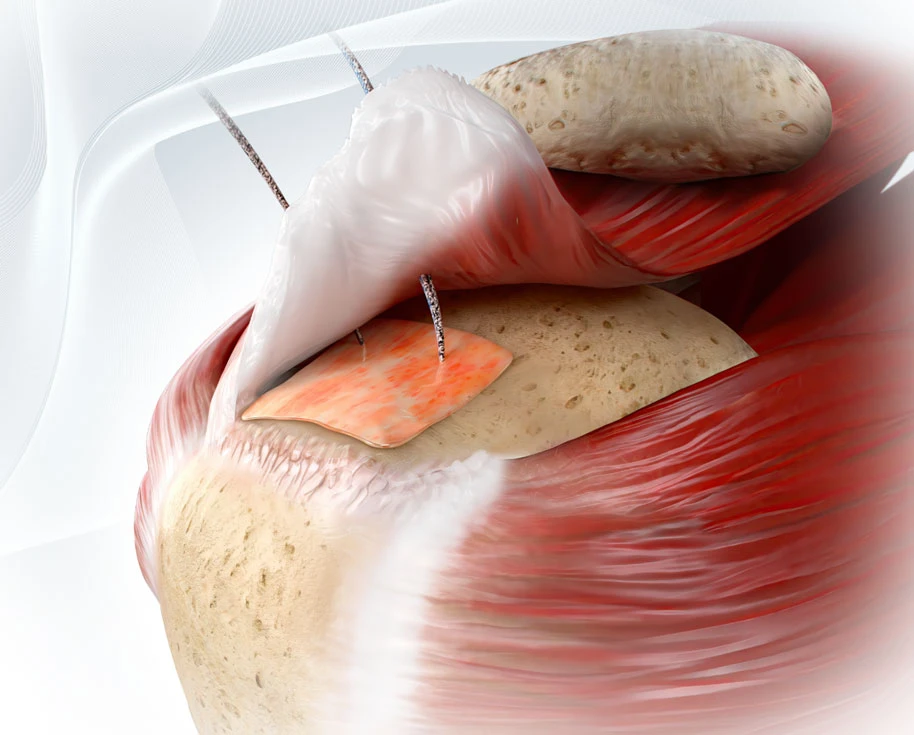
The tendon-bone interface represents a critical site for biological healing, while compromised tendon quality and the tendon-suture interface present additional considerations within the repair construct.
The faculty explored how these different challenges can inform the selection and placement of augmentation technologies:
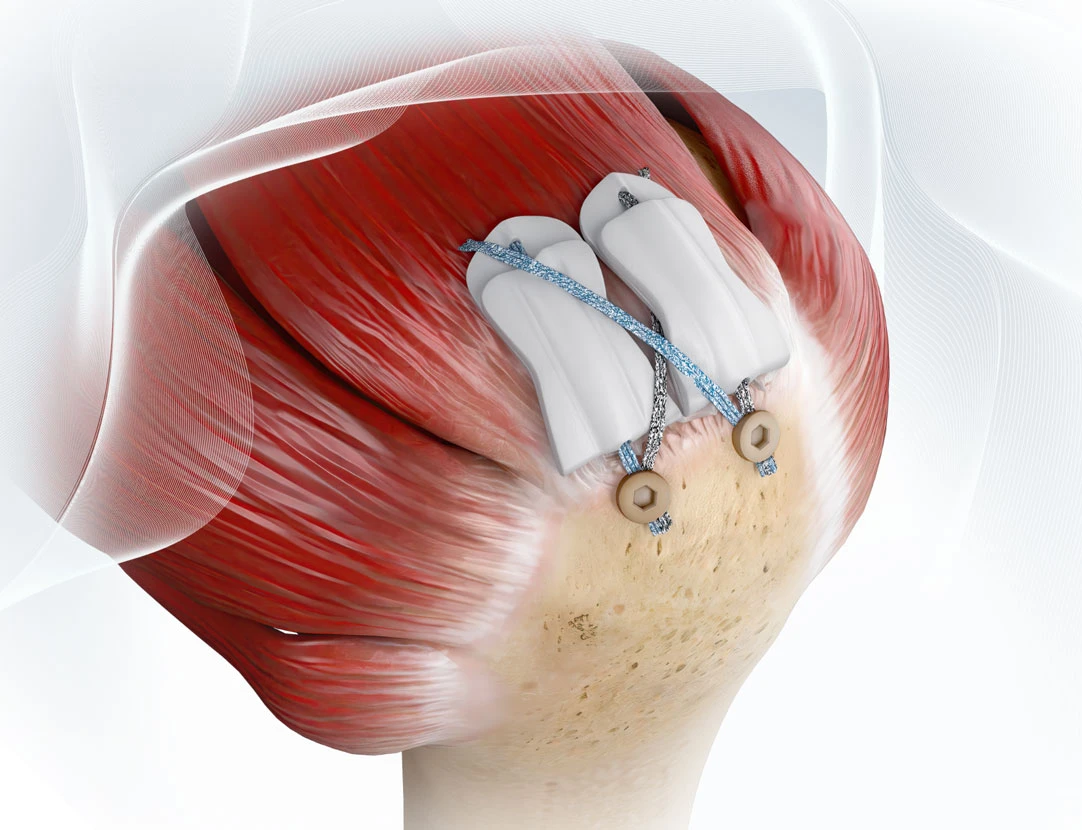
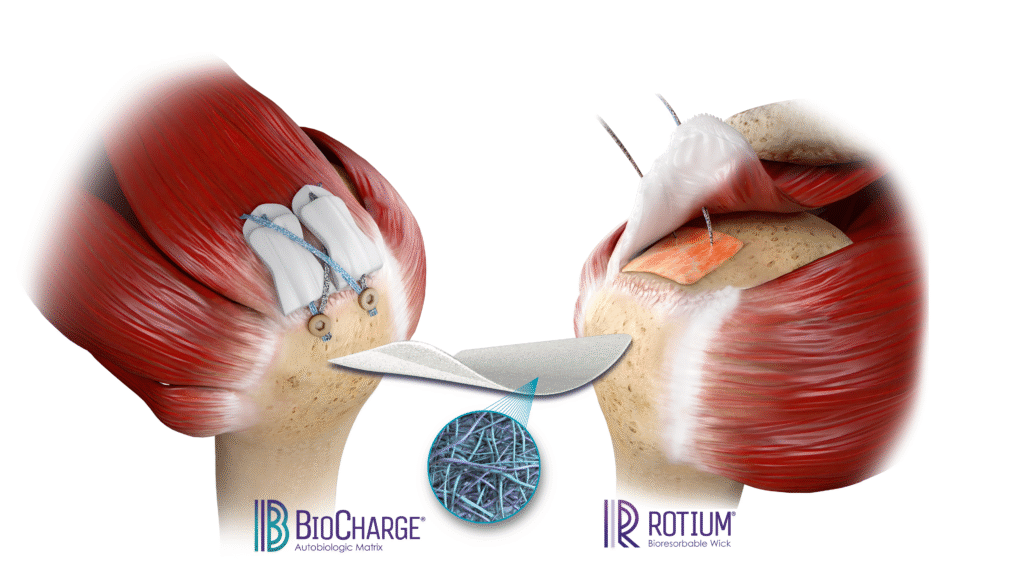
- Interpositional augmentation: Incorporating ROTIUM® Bioresorbable Wick at the tendon-bone interface.
- Onlay augmentation: Incorporating BioCharge® Autobiologic Matrix at the tendon-suture interface.
- Combined augmentation: Addressing both locations within a single repair through the BioStack approach.
Rather than approaching augmentation as a one-size-fits-all solution, the discussion explored how surgeons can tailor their strategies to the patient, tissue quality, tear characteristics, and specific challenges of the repair.
Beyond the Implant: Evidence, Technique and Value
The symposium also addressed the practical considerations that influence the adoption of augmentation technologies.
Clinical evidence is essential, but surgical efficiency, handling characteristics, ease of incorporation, and economic feasibility are also important considerations.
Through published clinical data, personal surgical experience, and complex case presentations, the faculty explored how these factors influence their approach to augmentation in everyday practice.
Watch the Full ICSES Symposium
Whether you are currently incorporating augmentation into your rotator cuff repairs or evaluating the available technologies, this symposium offers an opportunity to hear directly from experienced shoulder surgeons about the science, clinical evidence, and practical application of a fully synthetic approach.
Not Just Another Augment: Rethinking Rotator Cuff Healing from Enthesis to Onlay
Featuring Jonathan Levy, MD; Brian Badman, MD; Jacob Kirsch, MD; and Midhat Patel, MD.
Fully synthetic. Bioresorbable. From enthesis to onlay.