



Every Veterans Day, we recognize the service, sacrifice, and contributions of the men and women who have served our country. Their contributions also extend into medical research, where participation by veterans continues to deepen our understanding of complex health challenges.
One recent study from researchers at the Boise VA Medical Center offers a compelling example. By examining chronic wounds in veterans, researchers sought to better understand a deceptively difficult question: Why do some wounds heal while others remain stalled?
Chronic Wound Healing Is a Complex Biological Process
A chronic wound is more than an injury that has remained open. Healing depends on a complex interaction among the patient’s overall health and the local wound environment. Researchers increasingly recognize that factors such as metabolic health, nutrition, immune activity, microorganisms, inflammation, and local wound chemistry can interact throughout the healing process.
That complexity was the focus of a recent study titled Integration of localized microbiome, metabolome, and clinical datasets predicts healing in chronic wounds among veterans.
Researchers recruited patients receiving care through the Boise VA Wound Care Clinic and analyzed 45 diabetic foot ulcer debridement samples from 13 veterans. The investigators combined three different types of information: clinical characteristics, the wound microbiome, and the wound metabolome.
Looking Deeper Into Healing and Non-Healing Wounds
By combining clinical, microbial, and metabolic data, the researchers identified patterns that distinguished healing from non-healing wounds with 93.6% accuracy. More important than any single number was the biological picture that emerged.
Healing wounds were associated with patterns involving nutritional status, immune activity, lipid metabolism, and particular microbial populations. Non-healing wounds showed different patterns, including associations with hyperglycemia, neuropathy, antimicrobial-resistant organisms, pathogenic biofilms, and metabolic stress.
The findings reinforce an increasingly important idea in wound science: the biological environment surrounding a wound matters.
The authors described healing as a systems-level process in which host metabolism, nutrition, immunity, microorganisms, and local wound chemistry interact. A patient may have favorable systemic factors while still experiencing local barriers to healing—or the reverse.
Creating an Environment for Wound Management
Research like the Boise VA study highlights the complexity of the chronic wound environment and the importance of considering both patient-level and local wound factors when managing difficult-to-heal wounds.
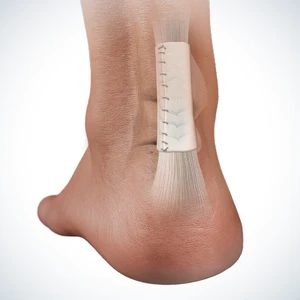
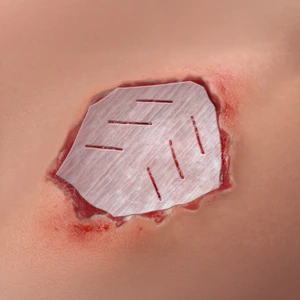
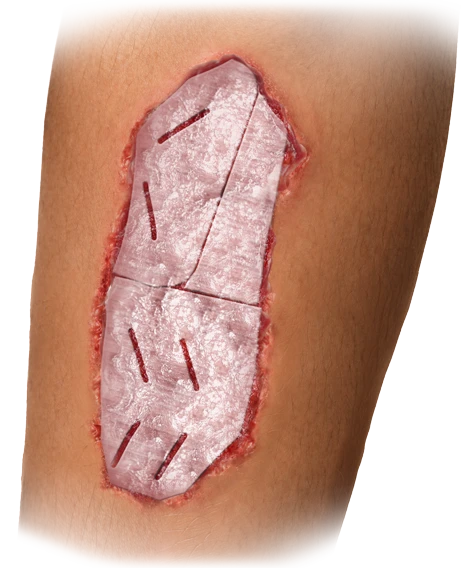
That emphasis on the local wound environment also connects with ongoing clinical research involving PHOENIX Wound Matrix®. PHOENIX is a fully synthetic, bioresorbable electrospun matrix composed of PGA and PLCL and designed to mimic the architecture of native extracellular matrix while providing a scaffold for granulation tissue.
In a published prospective case series evaluating a 3D electrospun synthetic polymer matrix, PHOENIX Wound Matrix, in hard-to-heal wounds, researchers treated 38 patients with 50 wounds, 70% of which were chronic. The study reported 67.6% mean percent area reduction at 4 weeks and 80% at 8 weeks, while 66% of wounds healed by 12 weeks. Mean time to healing was 49 days, and 62% of wounds received two or fewer applications. The study included a range of difficult-to-heal wound types, providing clinical evidence for the use of this electrospun synthetic matrix across complex wound presentations.
While PHOENIX was not evaluated in the Boise VA study, both bodies of research reflect growing interest in better understanding and supporting the complex wound-healing microenvironment.
Honoring Service Through the Continued Study of Healing
The veterans who participate in medical research contribute to knowledge that can extend far beyond the VA healthcare system. By examining why some chronic wounds progress toward healing while others remain stalled, researchers are helping build a more complete understanding of one of wound care’s persistent challenges.
This Veterans Day, Atreon Orthopedics honors those who have served our country—and recognizes the veterans whose participation in research continues to advance the science of healing.

References
Anders, C. B., Smith, H. L., Boyd, J., Davis, M. C., Lawton, T. M. W., Hwang, C., Doucette, M. M., & Ammons, M. C. B. (2025). Integration of localized microbiome, metabolome, and clinical datasets predicts healing in chronic wounds among veterans. bioRxiv. https://doi.org/10.1101/2025.09.07.674782
Lambert CJ Jr, Aviles F Jr, Eckert KA, Garoufalis M, Schilling RA. Efficacy of a 3D Electrospun Synthetic Polymer Matrix on Hard-to-Heal Wounds. Surgical Technology International. 2023;43. doi:10.52198/23.STI.43.WH1744.