




When Wound Dehiscence Becomes More Than a Wound
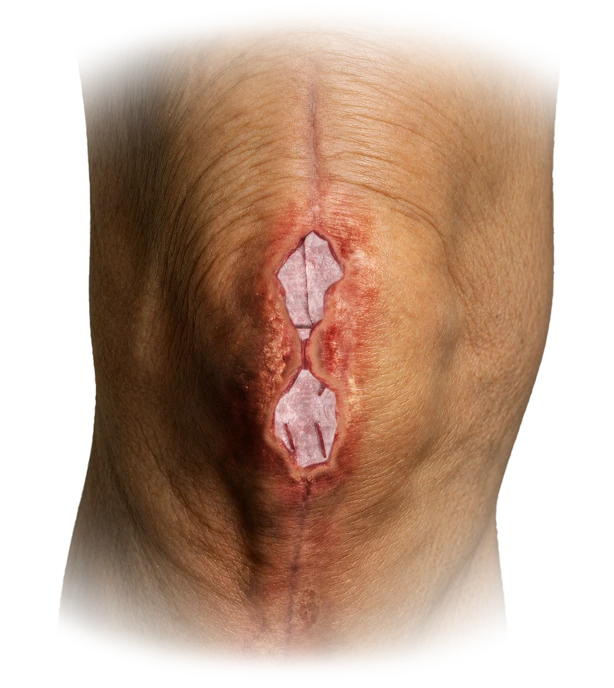
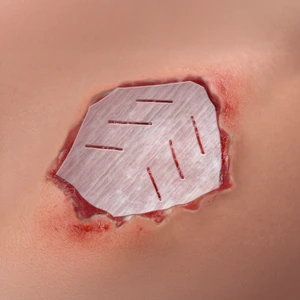
In orthopedic surgery, what begins as a problem at the incision can become a much larger clinical challenge. A postoperative wound dehiscence can expose already-compromised soft tissue to additional challenges at a time when successful healing is critical. In procedures involving large incisions, implants, revision surgery, trauma, or limited soft-tissue coverage, wound complications deserve particular attention. Wound Breakdown Can Start a Complication Cascade Dehiscence, persistent drainage, and tissue necrosis are more than superficial concerns. Published orthopedic research has linked wound complications with deeper complications, including prosthetic joint infection, reoperation, prolonged hospitalization, and increased healthcare costs. In one revision total knee arthroplasty study, wound complications requiring reoperation within 120 days were associated with an approximately tenfold higher risk of subsequent deep infection. The progression can become increasingly difficult to manage: Soft-tissue compromise → wound breakdown → bacterial contamination → potential biofilm formation → deep infection → reoperation or revision That risk becomes especially relevant in revision arthroplasty, orthopedic trauma, foot and ankle procedures, and oncology reconstruction, where tissue quality, vascularity, prior surgery, large implants, and patient comorbidities may make wound management more challenging. Why Healthy Granulation Tissue Matters Once a surgical wound has broken down, one of the key objectives is establishing a healthy wound bed that can support continued healing and progression toward closure. Healthy granulation tissue helps fill tissue defects and creates a vascularized foundation for subsequent wound closure strategies. In deeper or more complex wounds, developing an appropriate granulation bed may also be an important step before procedures such as split-thickness skin grafting. This makes the wound environment especially important. A scaffold used in a complex wound must do more than simply occupy space. It should provide a temporary structure that supports cellular activity as new tissue develops. Supporting the Wound Environment With PHOENIX® PHOENIX Wound Matrix® is an FDA-cleared, fully synthetic, bioresorbable wound matrix intended for the management of partial- and full-thickness wounds, including surgical wounds and wound dehiscence. PHOENIX is manufactured from electrospun PGA and PLCL polymers. Its nanofiber scaffold architecture is designed to mimic characteristics of native extracellular matrix, creating a temporary structure that supports cellular adhesion, infiltration, and proliferation as the matrix resorbs. The scaffold is designed to become increasingly porous during resorption, providing space for cellular proliferation and the development of healthy granulation tissue. PHOENIX resorbs via hydrolysis over approximately 10–14 days and is designed to conform to complex wound beds. For surgeons managing significant tissue defects, the goal is to create an environment that supports the formation of healthy, vascularized tissue while the wound progresses toward the next stage of healing. Clinical Evidence in Complex Lower-Extremity Wounds Clinical experience with PHOENIX Wound Matrix® has also been reported in complex lower-extremity and limb-salvage wounds. In one limb-salvage case series involving two patients and seven complex, non-healing wounds, all wounds achieved closure, amputation was avoided, and the average time to closure after PHOENIX introduction was approximately 5.6 weeks. Emerging data also support the importance of the wound microenvironment. In a 10-subject prospective pilot study of diabetic foot ulcers, wound-bed pH decreased significantly between two-week visits, while wound size was significantly reduced by Week 4. Microbiome composition varied considerably by patient, wound location, and wound size, and a more basic baseline pH was associated with greater bacterial diversity. These findings reinforce the rationale for considering not only wound closure, but also the local wound environment as healing progresses. A Synthetic Approach to Complex Surgical Wounds Because PHOENIX is fully synthetic, it contains no human- or animal-derived tissue. Its manufactured composition provides a consistent scaffold without the sourcing and tissue-handling considerations associated with biologic matrices. PHOENIX can be trimmed and repositioned to fit the wound bed, affixed when necessary, and used in conjunction with negative pressure wound therapy. For orthopedic surgeons managing postoperative wound complications, these characteristics provide another option within the broader wound-management strategy. PHOENIX is not intended to replace sound surgical judgment, appropriate debridement, infection management, or other elements of standard wound care. Instead, it provides a bioresorbable scaffold designed to support the wound environment and the formation of healthy tissue as healing progresses. For cases involving wound dehiscence, trauma wounds, revision procedures, or other complex surgical wounds, early attention to the wound environment and development of healthy granulation tissue may help establish the foundation needed for subsequent closure. Learn more about PHOENIX Wound Matrix® on the Atreon Orthopedics website, or contact the Atreon team to discuss its role in complex orthopedic wound management. References / Source Support Koressel J, Perez BA, Minutillo GT, Granruth CB, Mastrangelo S, Lee GC. Wound complications following revision total knee arthroplasty: prevalence and outcomes. Journal of Arthroplasty. 2023. Jahng KH, et al. Postoperative wound-healing complications after direct anterior approach total hip arthroplasty. Journal of Arthroplasty. 2016;31:2583–2587. PHOENIX Wound Matrix® Clinical Evidence Summary